Ramadan Mubarak Greeting Card
A Designer’s First Look: Elegant, But Not Always Embroiderable
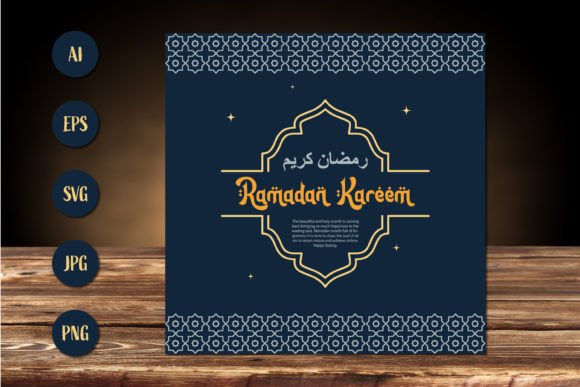
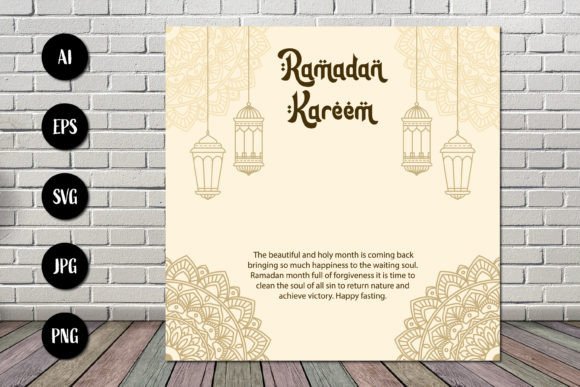
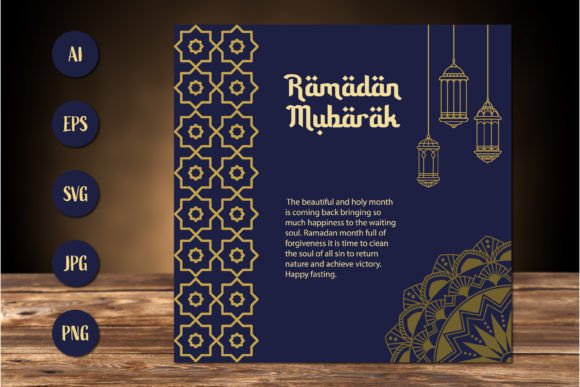
When I opened the Ramadan Mubarak Greeting Card file, I felt the quiet confidence of a well-composed vector illustration—mandala motifs framing a central lantern, delicate Islamic patterns wrapping the edges, clean negative space, and balanced symmetry. It reads as refined, respectful, and seasonally resonant—not flashy, not cluttered. That’s a win for greeting cards. But as an embroidery designer who’s stitched hundreds of client projects—from baby onesies to boutique aprons—I paused before importing it into my embroidery software. Because elegance on screen doesn’t always translate to clarity under needle.
Where This Design Truly Shines (and Where It Stumbles)
I recently used a variation of this motif for a custom embroidered tote bag for a local halal bakery’s Ramadan pop-up. We printed the Ramadan Mubarak Greeting Card as a printable mockup first, then scaled it down to fit a 4” hoop. The mandala’s outer ring held up beautifully in satin stitch, and the lantern’s silhouette read clearly—even at 3.5”. But the fine filigree inside the lantern? Lost in fill stitch density. It became a muddy blob unless we simplified it manually. That’s the core truth: this is a graphics asset first, a machine embroidery design second.
It works best when treated as a starting point—not a finished embroidery file. Think of it as high-quality design assets you adapt, not drop-in embroidery files. For example:
- Tote bags & tea towels: Perfect at medium scale (4–5”), especially with bold thread colors against natural linen or canvas.
- Pillow covers & nursery decor: The symmetry and soft geometry feel warm and intentional—ideal for handmade product gifting.
- Embroidered patches: Clean outlines convert well to applique design; just simplify inner details and reinforce edges.
- Sweatshirt embroidery: Works if centered on the chest or upper back—but avoid placing near seams or curved shoulders without testing hoop placement first.
Fabric & Function: What You Must Test Before Stitching
This design assumes calm, stable conditions—and real life rarely obliges. Here’s where caution kicks in:
- Thin or stretchy fabric? The lantern’s slender base and fine mandala lines will distort without cutaway stabilizer and precise hooping.
- Dark fabric? Those subtle Islamic pattern accents vanish unless you boost contrast with metallic or bright white thread—or rework them as raised satin borders.
- Curved surfaces (caps, baby hats)? The symmetrical layout fights gentle curves. You’ll need to split or reposition elements—not just shrink.
- Frequent washing? Dense fill areas (like the lantern’s interior) can pill or fray over time on cotton blends. Opt for lighter stitch density or switch to running stitch outlines for longevity.
What This Design Says About Your Brand—Before a Single Stitch
Using the Ramadan Mubarak Greeting Card thoughtfully elevates your craft business. Customers notice intentionality: the care in motif choice, the respect for cultural nuance, the balance between decoration and legibility. It signals professionalism—not just “I found a pretty graphic,” but “I understand how this translates to a tactile, lasting finished product.”
But missteps are visible too. If the inner mandala blurs on a sweatshirt, or the lettering disappears on a dark kitchen towel, it quietly erodes trust. Buyers don’t blame the template—they remember *your* shop’s name on the tag. So ask: Does this support your handmade presentation? Does it match your brand consistency? Will your Etsy seller audience recognize its value—or scroll past because it looks like generic clip art?
Practical Notes Every Embroidery Designer Should Keep Handy
Before stitching—or listing this as part of your digital embroidery file collection—do these five things:
- Test on scrap fabric first, using your exact thread, stabilizer, and machine settings—not just a digital preview.
- Check thread color contrast in both light and dark mockups. A gold thread that pops on cream may disappear on navy.
- Review stitch density manually. Vector elegance often hides hidden complexity—zoom in on the lantern’s center and simplify any area under 0.15mm wide.
- Confirm hoop size compatibility. This isn’t a one-size-fits-all embroidery project; it scales well from 3.75” to 5.5”, but beyond that, detail collapses.
- Verify licensing before selling physical items or bundling it into your own print templates pack. As a Graphics asset, usage rights vary—and commercial embroidery requires explicit permission.
Final Thought: A Thoughtful Starting Point, Not a Shortcut
The Ramadan Mubarak Greeting Card isn’t lazy design—it’s quiet, considered, and culturally grounded. But its strength lies in its adaptability, not its plug-and-play readiness. When I adapted it for a set of embroidered baby caps last year, I removed two layers of inner mandala, thickened the lantern outline, and replaced script-style flourishes with clean geometric repeats. The result felt personal, meaningful, and stitchable.
If you’re a small shop owner, custom apparel decorator, or creative entrepreneur building seasonal collections, treat this as raw material—not final output. Respect its roots, edit its edges, test its behavior, and let your craftsmanship carry the message forward. Because the most memorable personalized gift isn’t just beautiful on screen—it holds up, wears well, and feels made *for* someone.