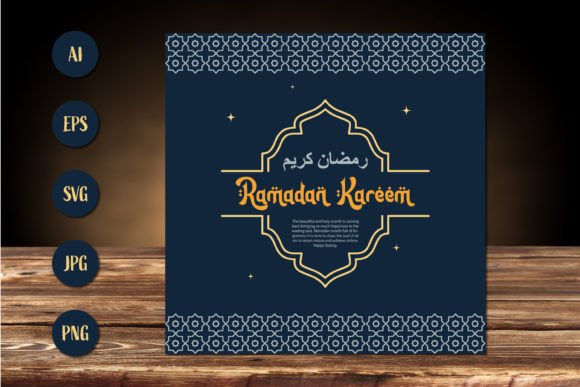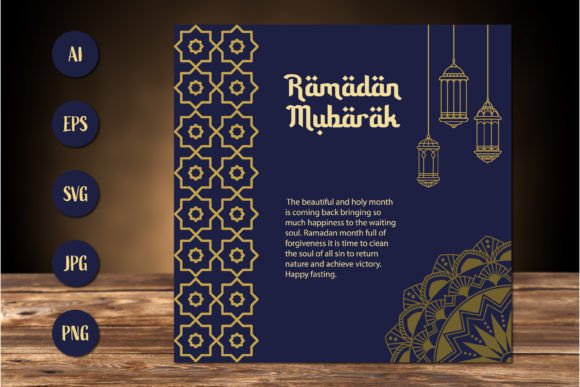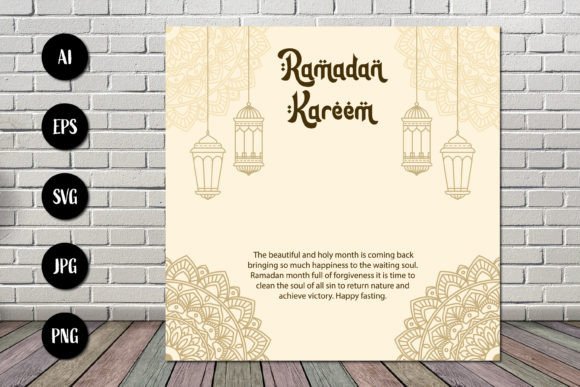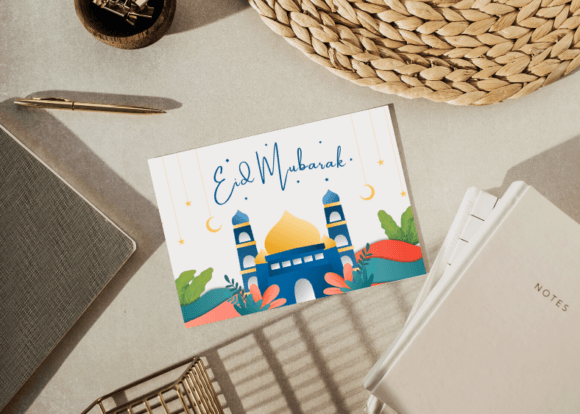
Ramadan Greeting Card
A Clean, Reverent Silhouette—Not Just Another Holiday Clipart
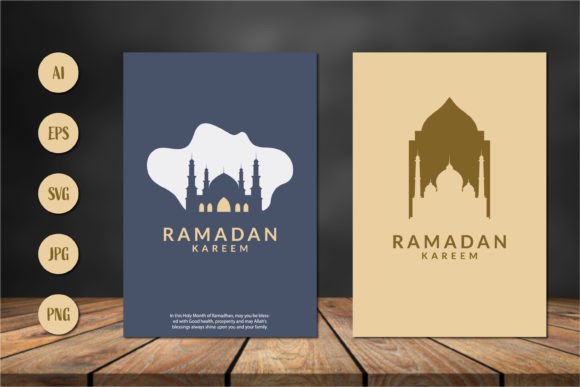
First glance at Ramadan Greeting Card tells me this isn’t a rushed seasonal template. It’s a negative space flat-style design centered on a mosque silhouette—minimal, balanced, and quietly dignified. There’s no cluttered calligraphy, no ornate borders competing for attention. Just clean outlines, intentional breathing room, and a visual rhythm that feels respectful rather than decorative. As someone who’s stitched dozens of faith-based motifs for baby onesies, boutique tea towels, and custom aprons, I immediately sense its potential: this isn’t meant to shout—it’s built to settle in, to be seen and felt over time.
Where It Lives Best: Embroidery That Breathes
I recently tested Ramadan Greeting Card as a centerpiece for a linen kitchen towel series—hand-stitched by local makers for a small Ramadan pop-up shop. The flat style translated beautifully: the mosque outline held crispness even with medium-weight fill stitch, and the negative space kept the fabric from feeling overloaded. It worked equally well scaled down (3.2" wide) on organic cotton baby burp cloths and scaled up (5.8") on unbleached canvas tote bags. No satin stitch runs, no dense underlay needed—just confident, open shapes that let the thread and fabric speak together.
For sweatshirt embroidery? Yes—but only on midweight fleece or French terry with light tear-away stabilizer. The design’s simplicity avoids puckering where stretchy knits often betray busy vector art. On caps? I’d place it cleanly on the front panel—not curved around the crown—and keep it under 4" wide. The clean lines hold up better than intricate minarets or script when navigating compound curves.
Where to Pause and Plan
This isn’t a “drop-in-and-stitch” file for every surface. On thin fabrics like voile or lightweight rayon challis, the open negative space can make stitching feel fragile—especially near the mosque’s arches and dome. I recommend testing on scrap first, using a soft cutaway stabilizer to prevent shadowing or distortion. Dark fabrics demand thoughtful thread contrast: matte black thread on charcoal linen reads elegantly, but glossy navy thread on black denim can blur edges. And if you’re planning a layered look—say, a patch over chambray—confirm the design’s outer perimeter clears seam allowances cleanly. No tiny flourishes or fine interior linework here to snag or distort.
Also worth noting: while Ramadan Greeting Card is labeled a Print Template, its vector foundation means it’s highly adaptable for embroidery prep—but it’s not an out-of-the-box machine embroidery design. You’ll need digitizing (or a trusted digitizer) to convert it into a stitch-ready file. Don’t assume it ships with .dst or .pes formats—check before buying, especially if you’re sourcing for commercial embroidery or Etsy listings.
What It Adds to Your Handmade Product
Customers notice intention. When this design appears on a hand-embroidered pillow cover or personalized gift box, it signals care—not just craft. The flat, modern aesthetic aligns with today’s quiet-luxury sensibility: think neutral palettes, natural fibers, and meaningful minimalism. It elevates a simple kitchen towel into a curated Ramadan gift; it grounds a child’s embroidered cap without infantilizing the occasion. For Etsy sellers and small shop owners, that translates to stronger perceived value, higher trust, and repeat buyers who recognize your brand’s consistency across holiday collections.
It also works hard behind the scenes. Because it’s built with generous negative space, it photographs cleanly in printable mockups—no retouching needed for social media or digital product previews. And unlike dense, high-stitch-count designs, it doesn’t eat through needles or create tension headaches on older machines. That reliability matters when you’re batching 30+ embroidered patches for a boutique order.
Practical Designer Notes Before You Stitch
- Always test on scrap fabric first—especially with textured weaves like herringbone or waffle-knit towels.
- Check thread color contrast in both natural and artificial light. A warm taupe may read softly on oatmeal linen but vanish on beige jersey.
- Review stitch density if digitizing yourself. Avoid heavy fill in the mosque’s base—opt for gentle running stitch or open fill to preserve drape.
- Confirm hoop size compatibility. Its proportions suit standard 4×4 and 5×7 hoops easily, but verify spacing if nesting multiple designs.
- Inspect small details at actual stitch size—those delicate arches must remain legible at 2.5" width.
- Test in black-and-white mockups to assess silhouette strength without color distraction.
- Compare light and dark fabric backgrounds—the same thread can behave differently on ivory vs. deep indigo.
- Use proper stabilizer: light cutaway for knits, tear-away for stable wovens, fusible for sheer layers.
- Verify licensing before selling finished items or bundling the vector as part of a digital embroidery kit—Ramadan Greeting Card is a Graphics asset, and usage rights vary by seller.
Final Thought: A Design That Honors the Moment
This isn’t flashy. It won’t dominate a crowded craft fair table with glitter or gradients. But Ramadan Greeting Card earns its place in thoughtful handmade work—on a newborn’s muslin blanket, a teacher’s embroidered apron, or a small-batch candle sleeve. It stitches cleanly, photographs honestly, and carries weight without heaviness. If your craft business values clarity, reverence, and quiet craftsmanship over trend-chasing, this design belongs in your working library—not as filler, but as foundation.