Ramadan Kareem Greeting Card: Graphics & Print Templates
As a graphic designer who’s delivered brand identities for halal skincare lines, seasonal bakery collections, and boutique Islamic book publishers, I recently evaluated the Ramadan Kareem Greeting Card for a real client project: a handmade date syrup brand launching a limited-edition Eid gift box. My goal wasn’t just to find “something festive”—it was to source a graphic design asset that elevates authenticity without sacrificing polish, supports small business branding, and performs across print and digital touchpoints.
First Impression: Elegant Restraint, Not Overloaded Ornament
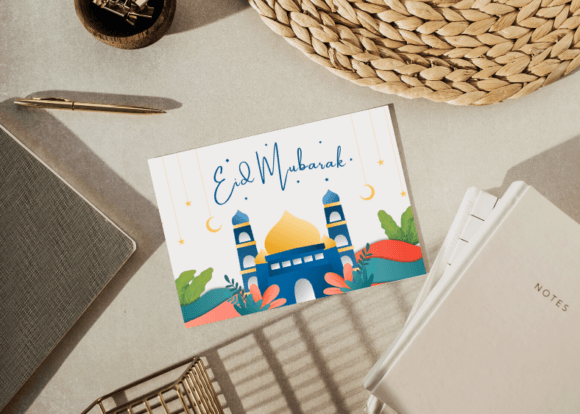
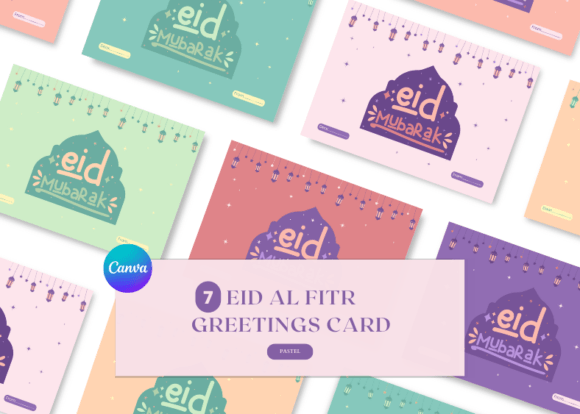
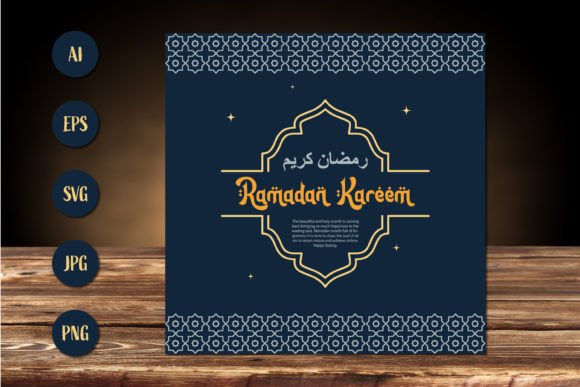
The Ramadan Kareem Greeting Card opens with quiet confidence—not loud, not literal, not clichéd. Its vector illustration balances traditional motifs (crescent, lantern, subtle arabesque flourishes) with modern negative space and balanced typography hierarchy. It feels like a creative design crafted for intentionality, not mass-produced clipart. That matters when your client is a female-led artisan brand aiming for warmth, reverence, and visual distinction in a crowded market.
Where It Shines in Real Client Work
This isn’t just a greeting card—it’s a versatile digital product with legs. In our date syrup project, we repurposed its core elements across six key deliverables:
- Packaging design: Used the lantern motif as a foil-stamped accent on kraft gift box lids—scaled cleanly from SVG, retained crisp edges at 1.5” height.
- Printable design: Adapted the border pattern into a repeat tile for tea towel labels and recipe cards—no pixelation, even at 300 DPI.
- Social media graphics: Extracted the crescent + calligraphy combo as a branded Instagram Story sticker—works equally well over soft pastel or deep indigo backgrounds.
- Cricut project: Imported the SVG into Design Space; cut flawlessly on vinyl for custom reusable shopping bags—clean curves, no anchor-point distortion.
- Product mockup: Placed the full card layout onto flat-lay photos of gift boxes—immediately elevated perceived value and seasonal cohesion.
- Editorial design: Repurposed the floral arabesque as a subtle watermark behind blog headers on their Shopify site—adds texture without competing with body text.
It excels in large layout areas, hero graphics, and themed collections. As a commercial design asset, it strengthens emotional appeal and audience engagement—especially for audiences valuing cultural resonance over generic holiday tropes.
Where Caution Is Required
This asset leans into elegance—not minimalism. So avoid deploying it in contexts demanding stark simplicity: corporate annual reports, medical wellness campaigns, or ultra-modern tech startups. It also needs breathing room. On small sizes (e.g., 16×16px favicons), the fine details blur; on crowded layouts (like multi-layered Canva templates), its ornamental balance can tip into visual noise. And while it pairs beautifully with serif fonts (Playfair Display, Cormorant Garamond) and warm script fonts (Dancing Script, Amatic SC), it clashes with ultra-thin sans-serifs (e.g., Montserrat Light) or rigid geometric type (e.g., Futura Bold).
Design Judgment: Readability, Trust, and Consistency
One test I ran: printed three versions—on matte uncoated paper, glossy brochure stock, and kraft label material. The vector linework held up impeccably, reinforcing visual trust. But contrast mattered: on light backgrounds, the gold-tone accents popped; on dark, I adjusted saturation slightly in Illustrator to preserve luminosity. That’s not a flaw—it’s a reminder that every graphic design asset must be stress-tested in context.
For brand consistency, this card doesn’t shout “Ramadan” through caricature—it whispers it through refined gesture. That builds professionalism and recognition across touchpoints. When your client’s logo uses muted terracotta and charcoal, this asset harmonizes—not competes.
Practical Designer Notes Before Deployment
Before clearing the Ramadan Kareem Greeting Card for client use, I always run these checks:
- Test in black and white: Confirmed all key shapes remain legible—critical for embroidery, foil stamping, or monochrome printing.
- Check contrast on both light and dark backgrounds using WCAG contrast checkers—especially where text overlays occur.
- Preview at scale: Zoomed out to 25% (simulating web hero size) and in to 400% (simulating Cricut cut preview)—no jagged edges or stray anchor points.
- Place on real mockups: Used Smart Objects in Photoshop to drop it onto physical product shots—verified alignment, proportion, and emotional tone.
- Review file formats: Confirmed inclusion of editable SVG, high-res PNG with transparency, and layered AI files—essential for print-on-demand flexibility.
- Inspect PNG transparency: No fringing or haloing around delicate lantern outlines—clean alpha channel.
- Confirm commercial license: Verified explicit permission for resale use (e.g., on Etsy product listings, POD mugs, sublimation designs)—non-negotiable for handmade business clients.
Final Verdict: A Thoughtful Creative Marketplace Find
The Ramadan Kareem Greeting Card isn’t filler—it’s a design bundle anchor. For designers supporting small business branding, Etsy product launches, or seasonal campaign rollouts, it delivers authentic mood without compromising execution quality. It works as a sticker design, a t-shirt design, a sublimation design, and a foundational element in brand identity systems. Just remember: its strength lies in thoughtful integration—not decorative overload. Used with intention, it doesn’t just say “Ramadan Kareem.” It says, “We see you. We honor this moment—with care, craft, and clarity.”