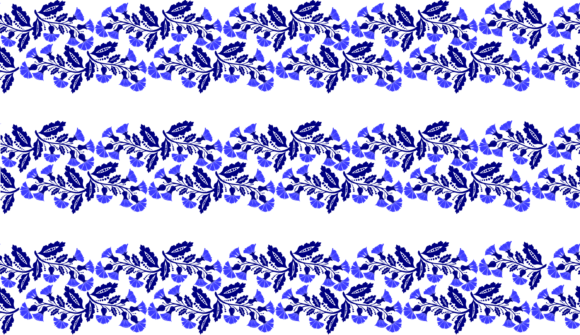
Flower Vector Border SVG
A Cornflower Border That Feels Like Summer—But Does It Stitch Cleanly?
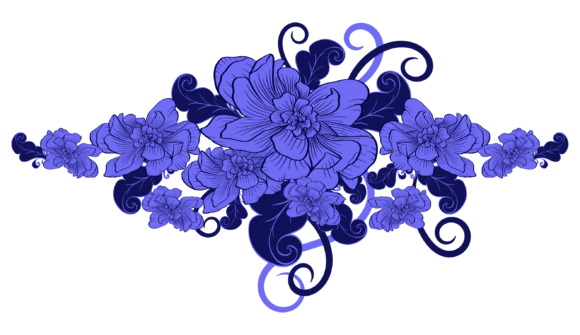
I pulled up Flower Vector Border Svg last week while prepping a custom embroidered linen tote for a local boutique client. The brief? “Fresh, botanical, but not fussy”—something that whispers garden gate, not floral wallpaper. First impression: this border is light on visual weight and high on quiet charm. The blue cornflowers are stylized—not hyper-realistic, not cartoonish—just clean, slightly elongated blooms spaced with breathing room. No dense filler, no overlapping petals crowding the line. It’s a seamless vector border, so it repeats without visible seams, and the transparent background means it drops right into any layout without clipping headaches.
Where This Border Belongs (and Where It Doesn’t)
This isn’t a design screaming for center-stage embroidery on a sweatshirt chest. It’s an accent—a frame, a whisper of detail. I tested it as a top-edge border on a cotton tea towel: 3.5" tall, stitched in soft perle cotton thread. The result? Crisp, airy, and unmistakably handmade—not mass-produced. It worked beautifully on medium-weight linen and stable quilting cotton. But on a stretchy baby onesie? I paused. The corners where stems meet need precise hooping and minimal fabric distortion—or you’ll get subtle waviness in the curve. Same goes for curved surfaces like baseball caps: unless you’re using a cap hoop and floating stabilizer, skip it there.
For embroidered patch use, it holds up well—especially when digitized with balanced satin stitch on petal edges and gentle fill stitch in the centers. But don’t push it smaller than 2.75" wide in final stitch-out. Below that, the delicate stem lines risk becoming indistinct or stitching too densely for breathable fabric. And on dark fabric? Yes—but only if your thread colors contrast intentionally. Navy thread on navy denim? You’ll lose definition. Go for pale cornflower blue or crisp white instead.
Real-World Fit: From Tote Bags to Boutique Branding
I used Flower Vector Border Svg as a framing element on a set of personalized baby burp cloths—stitched along the bottom hem in a soft mint thread. Parents loved the subtle, gender-neutral botanical touch. It felt intentional, not generic. That’s the quiet strength here: it supports storytelling without shouting. As a tote bag design, it wraps neatly around the top edge of canvas, especially when paired with a simple monogram or short phrase inside the frame. For wedding gifts or holiday embroidery, it adds seasonal warmth without dated motifs—cornflowers read “spring,” “summer,” or “calm elegance” depending on your palette and placement.
As a small shop owner, I also dropped it into digital mockups for my Etsy listings—layered over neutral backgrounds, then overlaid with soft shadows to simulate real depth. Because it’s a Graphics asset with transparent background, it scales cleanly for print templates, business cards, and even website banners. But remember: what works flat on screen doesn’t always translate to thread-on-fabric. Always test Flower Vector Border Svg on your actual fabric first—even if it’s just a 2"x2" scrap. Stitch density matters more than you think. Too tight, and it’ll pucker thin cotton. Too loose, and the stems won’t hold shape on terry cloth towels.
What This Border Says About Your Finished Product
When customers see this border on a handmade product, they register care—not complexity. It signals attention to balance, spacing, and restraint. That builds trust. A busy, overly detailed border can feel chaotic on a nursery pillow cover; this one feels like a thoughtful pause. It elevates personalized gift presentation without demanding premium pricing. And for commercial embroidery clients—say, a café ordering branded aprons—it gives consistency across items without locking you into one rigid logo format. You can rotate it, mirror it, or use just one quarter as a corner motif.
Practical Embroidery Designer Notes
- Test before committing: Run a sample on your target fabric + stabilizer combo. Cornflower stems are slender—check how they hold on textured weaves like burlap or looped terry.
- Thread color is non-negotiable: Blue cornflowers pop on cream or oatmeal linen, but fade on slate gray unless you boost saturation. Try black-and-white mockups first to assess contrast.
- Hoop size & placement: This border flows best when hooped straight—avoid rotating it mid-stitch unless your machine handles rotation smoothly. Corners benefit from slight overlap or manual repositioning.
- Stabilizer strategy: Use medium-weight cutaway for knits or stretchy blends; tear-away works fine for stable wovens. Skip lightweight mesh—it won’t support those fine stem lines.
- Licensing check: Since Flower Vector Border Svg falls under Print Templates, confirm whether commercial use (e.g., selling finished embroidered totes on Etsy) is permitted. When in doubt, contact the seller—don’t assume.
- Digitizing tip: If converting to a machine embroidery design yourself, keep stitch angles open on petals to avoid thread breaks. Avoid tiny running stitch details—they’ll vanish at small sizes.
Final Thought: A Quiet Design With Real Utility
Flower Vector Border Svg won’t win awards for drama—but it earns respect for reliability. It’s the kind of digital embroidery file that makes your craft business run smoother: versatile enough for baby embroidery and boutique branding, quiet enough to let your product—and your customer’s story—take center stage. It’s not flashy. It’s thoughtful. And in handmade work, that’s often the highest compliment.